
Organic fertilizers to restore and maintain soil health
The Alternative Agriculture Action Network (RAAA), a Peruvian member organization of SAN, has worked for decades to promote and develop solid and liquid organic fertilizers to improve soil health and fertility. Within this work, techniques such as composting, bocashi, vermiculture, the production of leachates, and the preparation of liquid organic fertilizers have been widely adopted—such as fish-based liquid fertilizer, which is now used in different export crops as well as by small and medium-scale producers. In this piece, we would like to share our experience.

Organic fertilizers: an alternative to address the climate crisis
Food production currently has a high level of dependence on synthetic fertilizers. For the last 60 years, since the Green Revolution became the technological model for managing production systems, the intensity of use of chemical inputs—such as fertilizers—has not declined globally or locally, especially in crops that are strongly linked to markets or are part of commodity chains.
While their application has increased production, over time criticism has grown regarding their environmental impacts and their contribution to global warming. This occurs because excess nitrogen and phosphorus degrade aquatic systems worldwide and drive eutrophication, in addition to releasing greenhouse gases such as nitrous oxide (N₂O).
Despite these concerns, fertilizer demand has increased globally, supported by global economic growth, which has led to excessive fertilizer application under the idea that “more is better.” According to FAO, global fertilizer consumption in 2024 reached approximately 190 million tons.
Although it is a widespread belief, there is no linear correlation between increasing the amount of fertilizer applied to agricultural soils and increasing crop production. On the contrary, higher application rates can lead to low nutrient-use efficiency and, in turn, lower yields, in addition to causing serious environmental problems. To break this high level of dependence on agrochemicals, it is necessary to shift the technological model for ensuring soil fertility—one based on the efficient use of agricultural and livestock residues.
Potential for producing solid and liquid organic fertilizers
From an agroecological perspective, it has been observed that production units generate agricultural and livestock residues that are often not adequately used and become an environmental problem. In agroecological practice we promote valuing these resources and turning them into an alternative to feed the soil and nourish plants.
All residues generated on the farm have value for preparing “food” for the soil, so their management should be grounded in the principles and practices of the circular economy and agroecology. For example, composting transforms plant biomass that can no longer be used for animal feed: by adding and mixing it with manure we produce a fertilizer that mainly improves the soil’s physical properties. Similarly, bocashi makes it possible to produce organic fertilizer in less time and with high value for improving the soil’s biological properties; and vermiculture is important for producing humus, which helps improve the soil’s chemical properties—such as cation exchange capacity (CEC).
Main techniques promoted by the Alternative Agriculture Action Network (RAAA)
Compost
Compost is a well-known aerobic decomposition process that makes use of organic residues from livestock, agriculture, agroindustry, and forestry, among others. Acceptance among farmers and rural development projects is increasing, and demand for this organic input is growing due to its benefits for improving soil physical properties. The innovations being implemented by many ventures in compost preparation are noteworthy: through the efforts of local producers, supply has increased.
Bocashi
Bocashi is a technique based on a mixed biofermentation process—both aerobic and anaerobic. It is simple and practical for producing a high-biological-quality solid organic fertilizer in a short time (one month). To accelerate decomposition, a series of components available on our farms are added to the organic residues: layers of crop residues, manure, ash, bran, molasses mixed with chicha and yeast, all mixed with water. The materials are layered, covered with plastic, and turned every three days. At each turning, moisture is checked and water is added if needed. It is then covered again with plastic. This is repeated five times, resulting in a product that significantly improves the soil’s biological properties.
Vermiculture to produce humus
Nature has provided us with great allies to help decompose organic residues. However, poor practices and indiscriminate use of synthetic inputs are reducing their presence in productive ecosystems. By raising worms (Eisenia foetida), we use the organic residues generated on the farm and convert them into humus to feed the soil. This humus is very beneficial for improving soil cation exchange capacity (CEC), which improves nutrient absorption capacity and therefore increases nutrient-use efficiency. In addition, the worm itself can serve as feed for chickens, ducks, and fish, among others.
Fertilizers made from fish waste
As part of its activities to develop and promote agroecological techniques, RAAA promotes the use of fishery residues to produce a very high-quality liquid organic fertilizer by subjecting fish residues to a hydrolysis process using microorganisms or enzymes plus molasses at a proportion of 10%. The digestion process lasts between 20 and 30 days, after which the fertilizer is ready to improve plant growth and development. The recommended dose is 5 liters per 200 liters of water, applied through irrigation system or as a drench.
Biol with fish residues
Biol is a liquid fertilizer produced through anaerobic fermentation using various solid and liquid organic residues. There are many valuable experiences currently underway in different parts of the country, such as the work of the Association of Women Producers of Biofertilizers or the HECOSAN agroecological farm, whose final product is already being offered for farmers to use.
To produce this fertilizer, you need: 50 kg of fresh cattle manure (from what the cows leave in the corral), 4 kg of fish innards (often given away or purchased for a symbolic amount in markets—better if you collect after midday, when they are cleaning), 4 kg of molasses (sold where animal feed is sold), 4 kg of ash, 2 liters of chicha de jora, and 250 g of yeast.
Extraction of soluble acids (teas)
There are many alternatives for feeding the soil and crops; we cannot think only of synthetic fertilizers. One technique is based on extracting soluble acids (humic and fulvic acids), which are efficient regulators of plant growth and development. It is important to note that all decomposed organic matter contains soluble acids that are very useful for promoting crop growth.
To do this, farmers must place 30 kg of organic fertilizer in a jute sack (or any recycled sack), immerse it in a 200-liter drum filled with water, shake it vigorously, and leave it for 24 hours. The resulting liquid will contain humic acids, fulvic acids, and beneficial microorganisms. This liquid fertilizer can be applied through the irrigation system or as a drench.
Continuous biodigester to produce liquid fertilizer
A continuous biodigester is an effective technological model for producing liquid fertilizer (biol) in appreciable quantities and on an ongoing basis, although it always requires cleaning and replacing pipes and hoses, so the system remains efficient. We have one at the HECOSAN agroecological farm: the biodigesters are producing liquid fertilizer that we use to grow our vegetables.
Managing soil fertility is also tied to social and organizational aspects and to family roles within the production unit. RAAA’s educational work in Peru focuses not only on preparing the fertilizers, but also on how to incorporate them into production systems, involving families in production and decision-making. In a future installment we will discuss the scalability of these processes in support of regenerative agriculture, as well as the multidimensional benefits they can bring to the community.
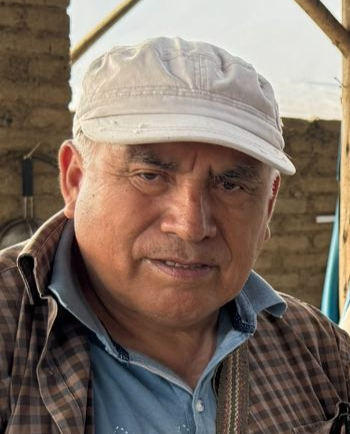
Luis Gomero Osorio is an agronomist, coordinador of the Alternative Action for Agriculture Network (RAAA), and organic farmer at the Fundo Agroecologico HECOSAN.


Comments