
From Uganda's Farms to Bangkok's Summit Rooms: SAN Members Move the Needle — April 21–27, 2026

Regenerative Agriculture Takes Center Stage
This week, SAN members demonstrated that regenerative agriculture is more than a buzzword — it's a practice being embedded into training rooms, farm fields, and global boardrooms alike.
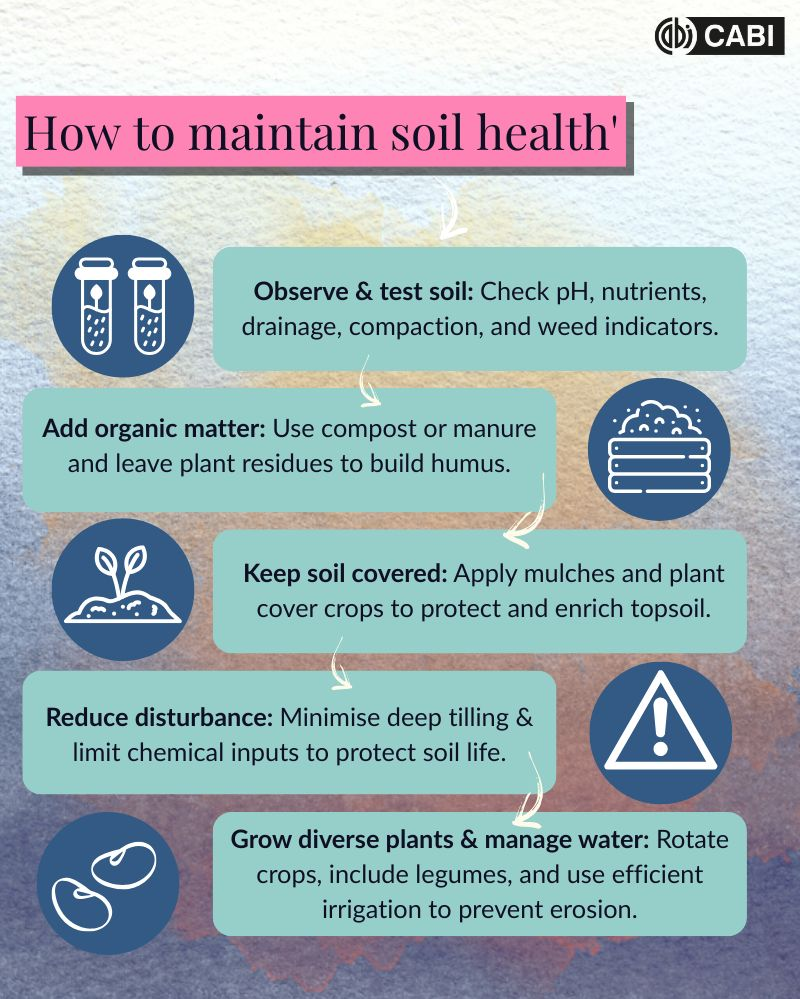
CABI reminded audiences that regenerative agriculture isn't just about reducing harm — it's about actively healing the land, with practices that restore soil health, capture carbon, and build resilient farming systems. This was complemented by a focused message on restoring soil health — rebuilding structure, organic matter, and biodiversity so soils can hold water, cycle nutrients, and support plant growth.
Meanwhile, Rainforest Alliance marked Earth Day by underscoring that conventional agriculture remains one of the leading drivers of deforestation, biodiversity loss, and climate change — and that regenerative agriculture offers a different path: restoring ecosystems, rebuilding soil health, and strengthening supply chain resilience for the communities that depend on it.
Smallholders, Pest Management & Natural Solutions
On-the-ground action this week showed the power of knowledge transfer and nature-based pest management in building farmer resilience.
CABI shared the story of Judith Nassuna, an agro-input dealer at Zunie Agri-consultancy in Wakiso District, Uganda, who attended pesticide safety training while five months pregnant. She learned that the headaches she had attributed to her pregnancy were likely linked to unprotected chemical exposure — and now passes that knowledge on to every farmer she works with, promoting lower-risk alternatives alongside conventional inputs. This is extension work at its most human.
CABI also issued a Fall Armyworm Alert, sharing five ways farmers can identify this destructive moth before it wreaks havoc on crops — a timely resource for smallholders across the regions where it threatens livelihoods.
In Peru, RAAA Perú shared practical, accessible solutions rooted in local biodiversity. Their team highlighted the use of wild tobacco — a widely distributed species in the Peruvian Andes — as a natural biocide to control the Epitrix beetle, whiteflies, and early-stage lepidopteran larvae. They also promoted earthworm farming to valorize organic waste, with the resulting humus improving soil chemical and biological properties — a low-cost, high-impact approach to soil health. RAAA Perú also pointed farmers toward HECOSAN for expertise on preparing soil nutrients for optimal productivity.
Biostimulants, Extension Skills & the Science of Plant Health
CABI continued its science communication work this week with two strong posts on plant health innovation. Their team explained that biostimulants are products that boost a plant's natural processes, helping crops grow healthier — a growing frontier in sustainable crop production. A follow-up post went deeper, explaining how biostimulants support plant health by activating the plant's own defense mechanisms.
CABI also highlighted the multifaceted skills needed for extension work at the intersection of research, practice, and community — from training farmers and organizing groups to managing trials and building trust. The post encouraged extension professionals at all stages of their career to reflect on their development goals.
Deforestation-Free Supply Chains & Consumer Trust
This week brought important contributions to the conversation around responsible sourcing, supply chain transparency, and the future of sustainability communication.
Rainforest Alliance drew attention to the reality that smallholder farmers grow up to 90% of the world's cocoa yet remain the least resilient actors in the supply chain. Their team, including Owen Gibbons FRSA, argued in a Reuters piece that mandatory due diligence — not just voluntary action — is what's needed to drive change at scale for cocoa farmers facing market volatility and climate change.
Rainforest Alliance also unpacked the EU's new Empowering Consumers for the Green Transition Directive (EmpCo), which is changing how companies can communicate sustainability claims. With greenwashing concerns on the rise, the directive targets vague environmental claims and requires independent verification — raising the bar for brand credibility.
The organization also announced the return of its Beneath the Canopy webinar series, heading to Uganda's Rwenzori Mountains on April 30 to explore how integrated approaches to education, livelihoods, and gender equality are addressing the root causes of child labor in coffee-growing communities.
A Global Sustainability Summit in Bangkok — and the Push from Strategy to Action
One of the week's biggest milestones was the convening of Preferred by Nature's Global Sustainability Summit 2026 (GSS2026) in Bangkok, Thailand — a full-week gathering of sustainability professionals from across the globe.
The summit officially opened on April 23 with Executive Director Peter Feilberg challenging delegates to move beyond fragmented efforts and choose to drive change rather than react to it. Day 1 concluded with a focus on strategic and scientific foundations, including planetary boundaries frameworks and the first round of breakout sessions identifying regional priorities.
Day 2 shifted to the question of how global sustainability frameworks are adapted for local contexts, with regional leads exploring the specific variables that turn case studies into scalable success stories. Day 3 moved from strategy to implementation — focusing on how Moonshots and Accelerators translate ambition into working systems across supply chains, landscapes, and regions, with stronger data systems and climate adaptation front of mind.
The week culminated with the 2026 General Assembly — the first in-person gathering in years — and a closing day that saw Preferred by Nature shift from high-level dialogue to a unified drive for measurable action for people, nature, and climate.
Indigenous Territories, Farms, Drones & Community-Led Conservation
In the Amazon, an important reminder came this week: the most effective forest protection is often the oldest. A post from this week highlighted how the Indigenous communities of the Sacred Amazonian Basins — more than 30 nations in Ecuador and Peru — protect more intact forest than most countries, not as a project, but as a way of life.
In Chiapas, Mexico, Pro Natura Sur participated in the second edition of a Course-Workshop on community use of drones for the management, conservation, and defense of territory, organized by CIMSUR-UNAM (Center for Multidisciplinary Research on Chiapas and the Southern Border). The workshop reflects a growing movement of Indigenous and local communities using modern tools to protect ancestral landscapes.
Radical Collaboration, Local Roots, Global Impact
From a pregnant agro-input dealer in Uganda learning to protect herself and her customers from pesticide harm, to a global summit in Bangkok driving sustainability frameworks across continents — this week's updates reflect the breadth and depth of what SAN's Global Impact Network makes possible.
Whether it's CABI building extension capacity, RAAA Perú scaling nature-based pest solutions, Rainforest Alliance pushing for mandatory accountability in cocoa supply chains, Preferred by Nature convening global action on deforestation-free sourcing, or Pro Natura Sur equipping communities with drone technology for territorial defense — each action is a thread in the same fabric.
This is what radical collaboration for people and planet looks like in practice: not one silver bullet, but thousands of intentional actions, rooted locally and connected globally through SAN's network. The challenges facing agriculture and our natural world are urgent — and so is the resolve of the people working every day to meet them.


Comments